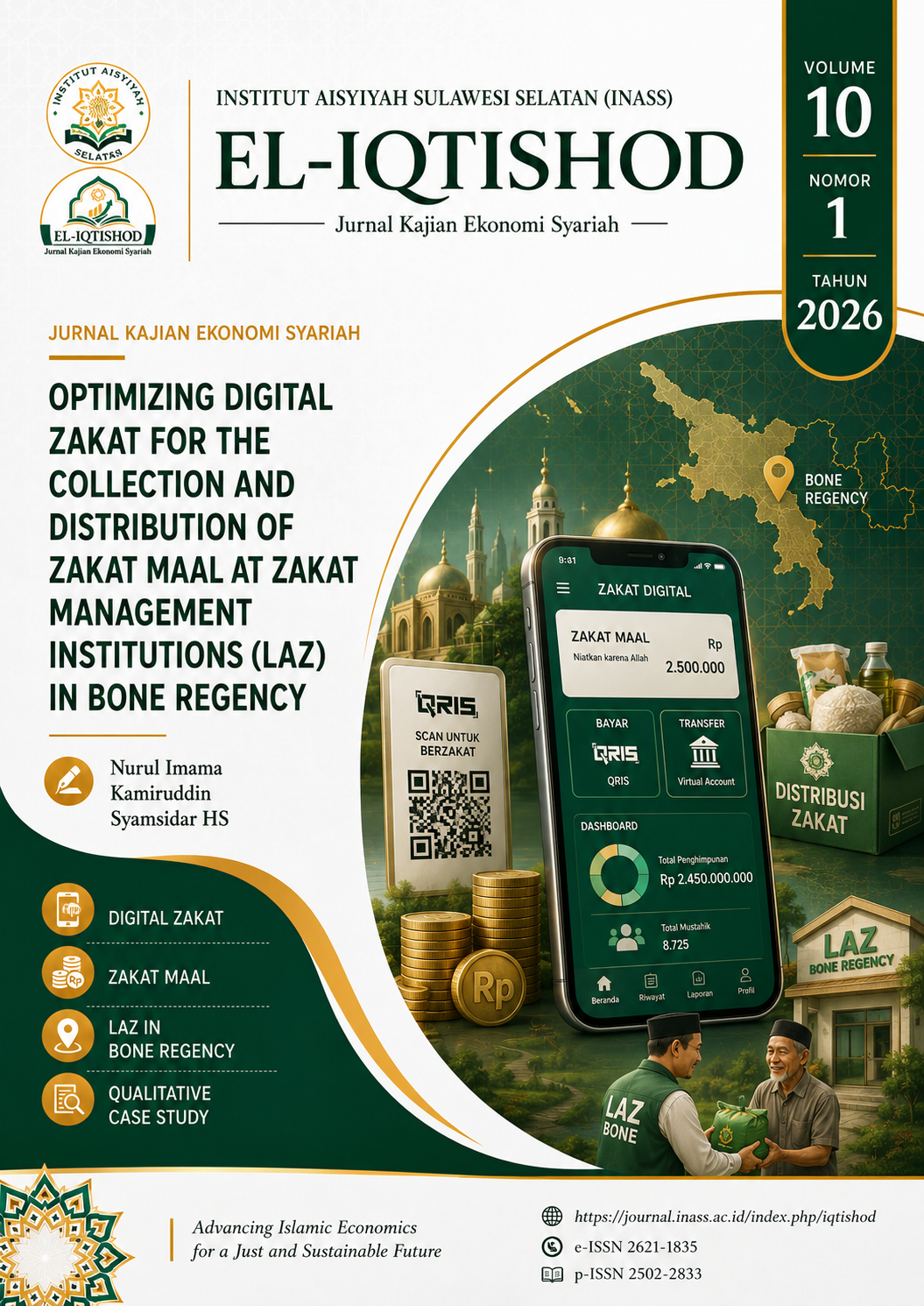
Optimizing Digital Zakat for the Collection and Distribution of Zakat Maal at Zakat Management Institutions (LAZ) in Bone Regency
DOI:
https://doi.org/10.70136/el-iqtishod.v10i1.678Kata Kunci:
Digital Zakat, Zakat Maal, Zakat Management Institutions, Digital Transformation, Islamic PhilanthropyAbstrak
Rapid advances in digital technology have driven a transformation in the management of Islamic philanthropy, including zakat services. However, the implementation of digital zakat at Zakat Collection Agencies (LAZ) in rural areas remains uneven due to differences in technological readiness, digital literacy, and public acceptance. This study aims to analyze the implementation of digital zakat, digital-based systems for the collection and distribution of zakat al-maal, the obstacles encountered, and strategies for optimizing digital zakat at Zakat Management Institutions in Bone Regency. This study employs a descriptive qualitative approach using a case study design. Data were collected through interviews, observations, and documentation involving five zakat management institutions in Bone Regency: BAZNAS, Wahdah Inspirasi Zakat (WIZ), LAZISMU, LAZIS IPU, and Baitul Maal Hidayatullah (BMH). Data were analyzed through the stages of data reduction, data presentation, and drawing conclusions, supported by source triangulation. The results show that all institutions have implemented digital zakat services via bank transfers, QRIS, websites, social media, and WhatsApp, although conventional services are still maintained through a hybrid service system. Digitization has improved accessibility, convenience, and transparency in zakat collection, while digital zakat distribution is still applied selectively based on the circumstances of the mustahik. The main challenges include low digital literacy
Keywords: Digital Zakat, Zakat on Wealth, Zakat Collection, Zakat Distribution, Zakat Management Institutions (LAZ), Bone Regency.
Referensi
Ahimsa, E. A., et al. (2023). Understanding muzaki adoption of digital zakat payments in Indonesia. Review of Islamic Social Finance and Entrepreneurship, 2(2), 182–193.
Amar, F., Purwoko, B., & Sihite, M. (2024). Unlocking success: Factors influencing zakat collection and reputation at Indonesian zakat institution. Indonesian Journal of Islam and Muslim Societies, 14(1), 145–176.
Arif, M. N. R. A., Nofrianto, N., & Fasa, M. I. (2023). The preference of Muslim young generation in using digital zakat payment: Evidence in Indonesia. Al-Uqud: Journal of Islamic Economics, 7(1), 1–16.
Audrin, C., & Audrin, B. (2022). Key factors in digital literacy in learning and education: A systematic literature review using text mining. Education and Information Technologies, 27(6), 7395–7419.
Haryanto, R., et al. (2023). Digital literacy and determinants of online zakat payments: Lessons from Indonesia experience with UTAUT. Journal of Law and Sustainable Development, 11(4), 1–18.
Haryono, H., & Yusuf, R. (2025). Transformasi digital zakat: Analisis efektivitas platform digital dalam peningkatan kepatuhan muzakki di era Society 5.0. Ad-Deenar: Jurnal Ekonomi dan Bisnis Islam, 9(1), 183–192.
Heryani, I. I. P., Simanjuntak, M., & Maulana, A. (2020). Perilaku penggunaan internet banking sebagai alat transaksi finansial. Jurnal Aplikasi Bisnis dan Manajemen, 6(1), 86–95.
Lestari, F., et al. (2026). Digitalisasi pengelolaan zakat dalam meningkatkan efisiensi dan kepercayaan publik, 11(204), 1328–1338.
Loh, Y. A. C., & Chib, A. (2021). Reconsidering the digital divide: An analytical framework from access to appropriation. Information Technology & People, 35(2), 647–676.
Nasution, J. (2023). Determinants of the successful digital campaigns on zakat: An analysis based on Islamic marketing perspective. Ekuilibrium: Jurnal Ilmiah Bidang Ilmu Ekonomi, 18(1), 94–109.
Nur Hasan, M. B., & Saputra, A. (2024). Zakat sebagai upaya peningkatan kesejahteraan dalam perspektif Surah At-Taubah ayat 60. Al-Bunyan: Interdisciplinary Journal of Qur’an and Hadith Studies, 2(1), 69–76.
Nurjannah, N., & Hasibuan, R. R. A. (2022). Analisis pendistribusian zakat produktif pada Lembaga Amil Zakat Nasional Inisiatif Zakat Indonesia Cabang Sumatera Utara. El-Mujtama: Jurnal Pengabdian Masyarakat, 2(2), 209–220.
Panggah Mulyo, G., et al. (2023). Systematic literature review: The role of digital in the management of zakat. Proceeding of International Conference on Islamic Philanthropy, 1, 170–181.
Prastyo, D., & Rachmawati, I. D. (2023). Digitalization as a strategy for collecting zakat, infaq, shadaqoh funds during the COVID-19 pandemic by Lazismu East Java. Indonesian Journal of Innovation Studies, 21.
Rahayuningsih, T. E., Susilowati, D., & Sudibyo, Y. A. (2021). Determinant factors of digital zakat payment by Indonesian muzakki. Indonesian Journal of Islamic Business and Economics, 3(2), 32–46.
Satria, & Eky, A. (2024). Preferensi muzakki dalam pembayaran zakat digital melalui BAZNAS: Analisis hukum Islam dan regulasi. Iqtishaduna: Jurnal Ilmiah Mahasiswa Hukum Ekonomi Syariah, 6(4), 306–312.
Sebrina, I. H. K., & Sirajuddin. (2023). Tinjauan ekonomi Islam terhadap mekanisme penghimpunan dan pengelolaan zakat di Kelurahan Tolo Barat, Kecamatan Kelara, Kabupaten Jeneponto. ORGANIZE: Journal of Economics, Management and Finance, 2(1), 40–49.
Siregar, T. H., Majid, S. A., & Sugianto. (2025). Efisiensi syariah dalam era digital: Tinjauan sistematis terhadap pengelolaan zakat di era QRIS dan fintech Islam. JSE: Jurnal Sharia Economica, 4(3), 111–122.
Suharti, et al. (2022). Kompleksitas konflik Ukraina–Rusia. Jurnal Pendidikan IPS, 12, 39–48.
Wulansari Akbarillah, M. (2022). Analisis efektivitas platform digital pengumpulan zakat dan infaq syariah dan ekonomi. Jurnal Masharif Al-Syariah: Jurnal Ekonomi dan Perbankan Syariah, 10(204), 1603–1616.
Unduhan
Diterbitkan
Cara Mengutip
Terbitan
Bagian
Lisensi
Hak Cipta (c) 2026 Nurul Imama, Kamiruddin, Syamsidar HS

Artikel ini berlisensi Creative Commons Attribution 4.0 International License.